
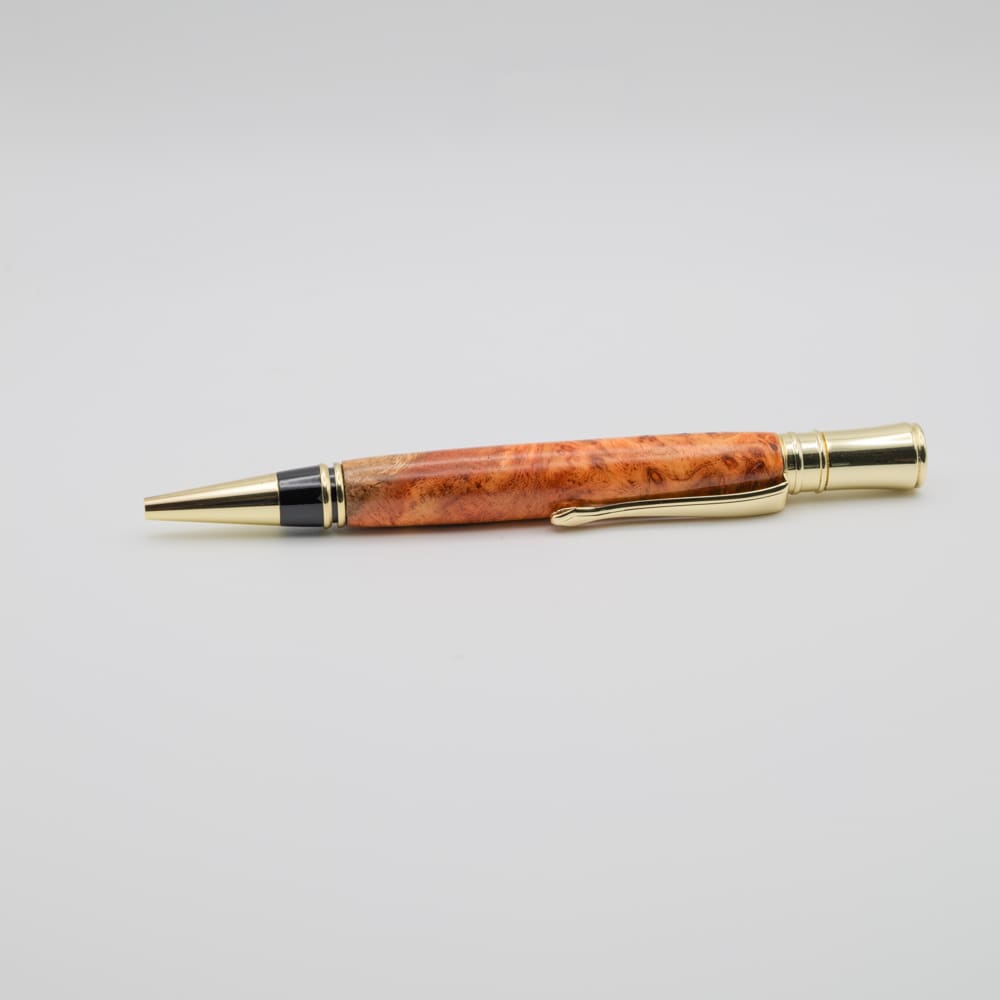
Why I Stabilise Wood for Pen Turning
When you first start turning pens, it’s tempting to grab any beautiful piece of wood and start crafting. But I’ve learned through experience that stabilisation isn’t just an extra step—it’s what transforms fragile, unpredictable blanks into reliable, stunning writing instruments that will last a lifetime.
The Problem with Unstabilised Wood
Wood is organic and dynamic. It absorbs moisture, expands and contracts with humidity changes, and can be surprisingly fragile when turned to the thin walls required for pens. Spalted woods, burls, and other highly figured pieces—the very woods that create the most spectacular pens—are often the most delicate and prone to crumbling during turning or cracking after completion.
I’ve had the frustrating experience of spending an hour carefully turning a beautiful blank, only to have it chip or split at the final stage. Even worse is when a finished pen develops cracks months later due to seasonal humidity changes.
What Stabilisation Does
Stabilisation involves impregnating the wood with resin under vacuum pressure. The resin fills all the voids, cracks, and porous areas within the wood’s cellular structure, essentially turning it into a wood-resin composite.
The benefits are remarkable. Stabilised wood machines beautifully with clean cuts and minimal tearout, even in highly figured or spalted pieces. It takes a superb finish that highlights the natural grain whilst adding depth and lustre. Most importantly, it’s dimensionally stable—it won’t warp, crack, or split with humidity changes.
The Difference You Can Feel
When you hold a pen turned from stabilised wood, you can feel the quality. The surface is smooth and polished, the wood feels solid and substantial, and there’s a confidence that this piece will look just as beautiful in ten years as it does today.
For burls, spalted woods, and other premium materials, stabilisation isn’t optional—it’s essential. It allows me to work with the most spectacular pieces of wood whilst ensuring every pen I create meets the highest standards of durability and craftsmanship.
Worth Every Step
Yes, stabilisation adds time and complexity to the process. But when I see the vibrant colours, intricate patterns, and flawless finish on a completed pen, I know it’s absolutely worth it. Stabilisation doesn’t just protect the wood—it unlocks its full potential, allowing nature’s beauty to shine through in a piece that will be treasured for years to come.