
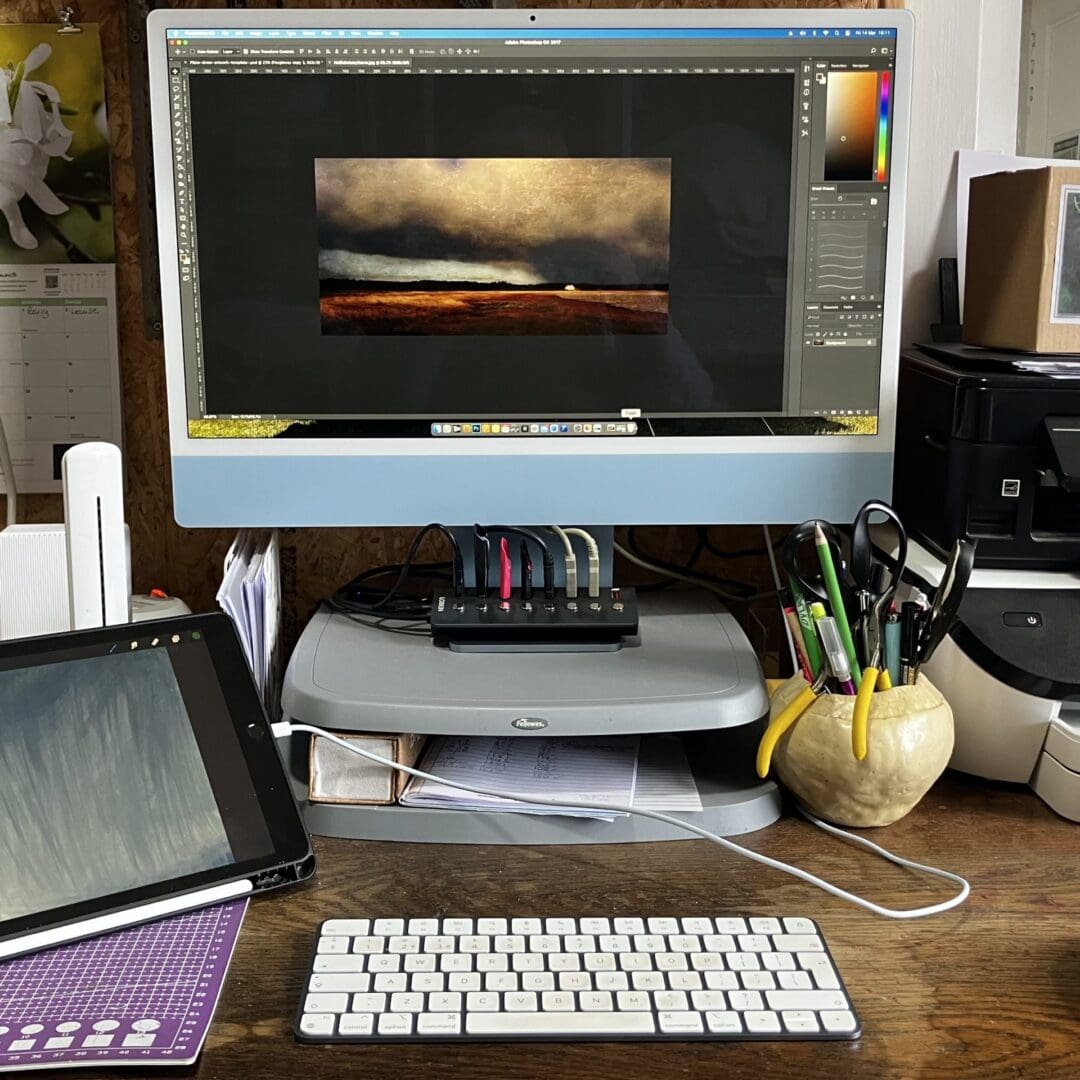
I started making digital collages around ten years ago. I’d learned about creating layered effects in the darkroom, using film, but the advent of digital photography made this a far more accessible, and less chemical, process! Digital collages are made by layering images of textures on top of the source photograph using software such as Photoshop and then manipulating each layer until it gives the desired effect.

I personally prefer a more painterly or hand drawn print look to my collages, so I use textures to help me to achieve that. My bank of textures include photographs of wood, metal, textiles, painted surfaces, stone and botanicals. It’s a long and painstaking process, moving between layers and working with the effect and the opacity of each, but ultimately I end up with an image that is no longer a photograph.

Deciding what to call this technique was a bit of a nightmare in itself; would people be put off by the word ‘digital’, would they think it was AI, would they think I’d cheated and just pressed a button in an app? However I’ve settle on digital collage as that is exactly what this process is.
I use a pigment printer to print out limited editions of my final picture. The pigment ink gives a better print, which lasts longer than ordinary inkjet prints. It is a giclée print, for all intents and purposes, printed using eight separate ink colours. I also use a high quality archival paper which is slightly textured in a way similar to watercolour paper.

To keep costs down I am only selling my prints here as unframed. This also allows you to approach a framer with your own interior design ideas, rather than being forced to accept mine!