
The price of silver has been increasing rapidly during 2025. It’s now coming to the point whereby many silversmiths are questioning how they can continue without raising their prices, which many customers will find prohibitive. The problem is unlikely to go away as silver is required for the electronic, renewable energy and mobile phone industries, as well as defence-related manufacturing. Because of it’s anti-microbial and non-toxic qualities it is also used for medical and consumer products. China has now introduced stricter export controls and the USA has officially added silver to their “critical minerals” list, with the possibility of tariffs.
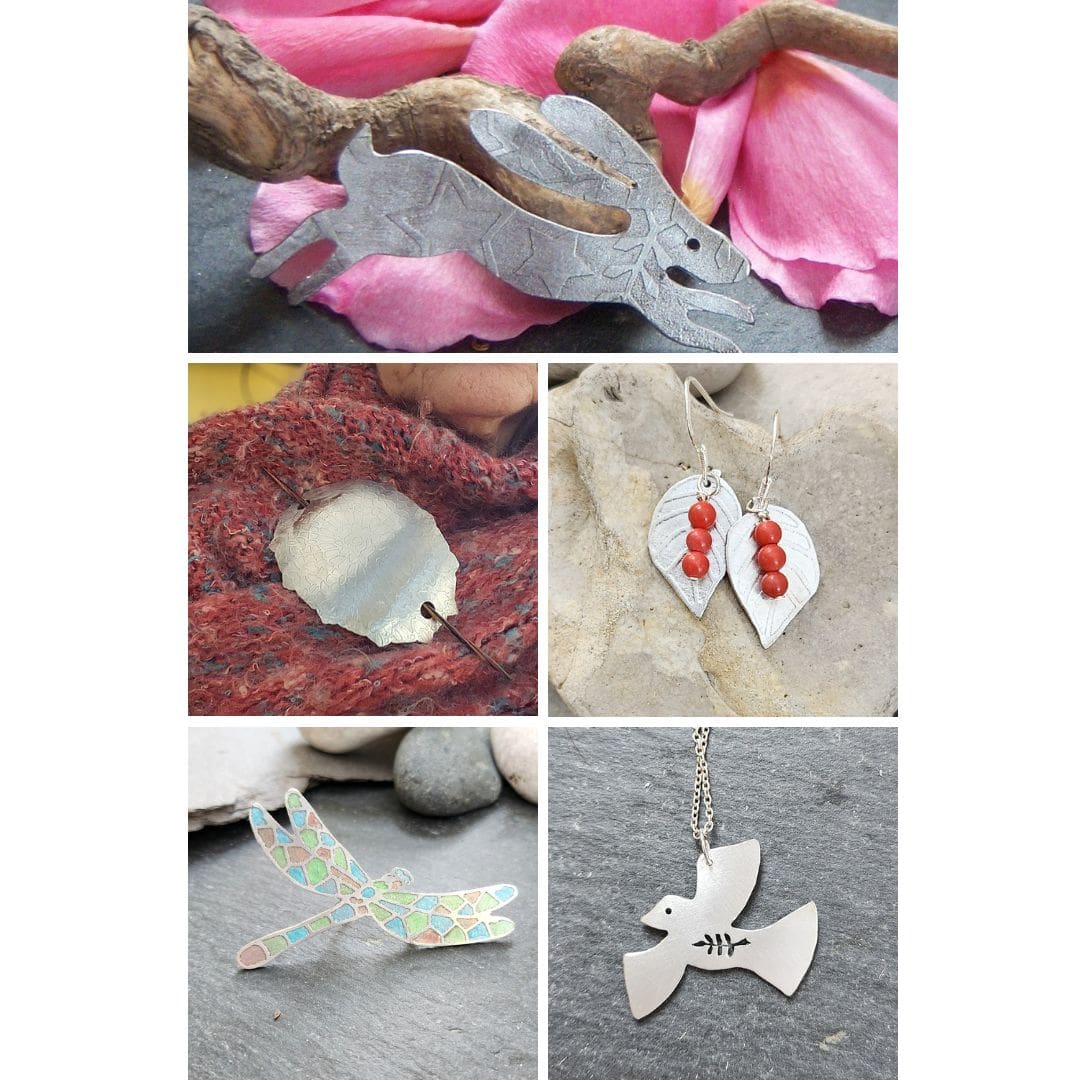
Personally, I will be reducing the amount of sterling silver pieces I will be making. When I do, they will be more expensive than before. I already use a lot of copper, brass, glass and pewter, as well as upcycling coins and cutlery, so I will be doing more in these materials. I will be working on updating my flame painting copper technique. I may also resume upcycling from old biscuit tins. All the fixings and findings will still be sterling silver as they always have been.
But let’s talk about pewter
The formula changes several decades ago, so there is no longer any lead in it. The only pieces you will find that type of pewter’s old formula in this country are antiques, not made in the last few decades – so any of those old tankards you might have, don’t drink out of them!!
Today’s pewter is an alloy consisting mainly of tin though it also contains small amounts of copper and antimony, giving it a shine that it never had before. It is definitely lead-free and nickel-free.
Using pewter enables me to etch in a metal that can look as shiny as silver but because it is not such an expensive material and it’s softer, I can experiment more and sometimes do designs on a larger scale (Silver is legally required to be hallmarked once over 7.78g in the UK, adding to the cost; pewter isn’t required at any weight.)
However, all the hooks, wires, connections and chains to connect the pewter, are made from sterling silver as with all my other jewellery.
Pewter Care
Because it doesn’t contain lead, it doesn’t tarnish as quickly. Mild soap and warm water will do the trick. Dry it with a soft cloth – don’t forget that it is a malleable metal and can be bent easily.
You can also make a mixture of flour, salt and white vinegar to create a paste. Apply to the jewellery and leave on for at least 15 minutes, or rub gently with a circular movement, then rinse in warm water, drying with a soft cloth.
Light tarnish can be removed with a standard silver polishing cloth, giving it a wash and dry afterwards.